


Knowledge
What are the Differences Among C45 Castings, 40Cr Castings and 42CrMo Castings?
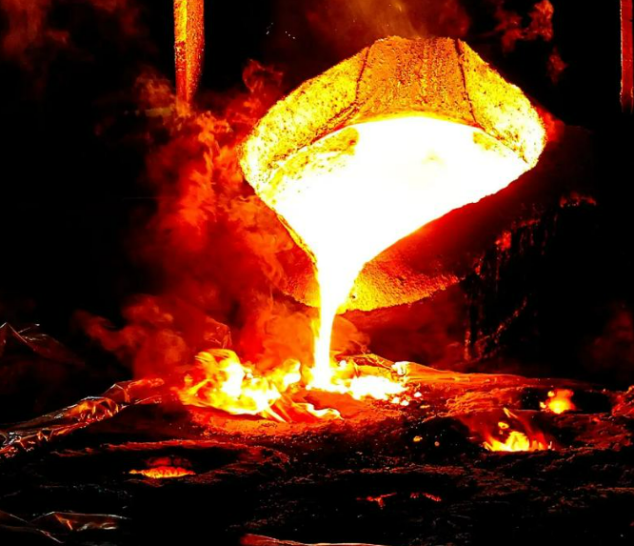
In the fields of mechanical design, equipment manufacturing, transmission systems, and non-standard automation, 45 steel, 40Cr, and 42CrMo are the three most commonly used structural steels. Although they may seem similar at first glance, their chemical compositions, mechanical properties, responses to heat treatment, and application scenarios are quite different. Selecting the wrong material can lead to shortened service life at best and direct failure at worst. This article systematically dissects the differences among the three from an engineering application perspective and tells you how to make the right selection.
I. Chemical Composition Differences: The Foundation of Materials
45# steel is a typical medium carbon steel, mainly composed of carbon with almost no obvious alloy elements.
40Cr adds approximately 1% chromium, significantly enhancing its strength, hardenability, and wear resistance.
42CrMo further adds molybdenum on the basis of 40Cr, further improving its hardenability, toughness, and impact resistance, and maintaining good hardening depth in large cross-section parts.
In summary:
45# steel is the "plain type", 40Cr is the "reinforced type", and 42CrMo is the "high strength and toughness type".
II. Mechanical Property Differences: Who is Stronger?
Under the same heat treatment conditions, the strength grades of the three show a very clear gradient:
45# steel has the most ordinary strength and is only suitable for medium or general loads;
40Cr has significantly better strength and toughness than 45# steel and is a "versatile alloy steel" in the mechanical industry;
42CrMo has higher strength, better impact toughness, and superior fatigue life, making it the main material for high-stress critical structural components.
In simple terms:
Use 45# steel for low strength requirements, 40Cr for medium strength, and 42CrMo for high strength and high reliability requirements.
III. Heat Treatment Performance Differences: Can it "Handle Heat Treatment"?
45# steel has poor hardenability, and the core cannot be fully hardened when the cross-section is too thick, so it is suitable for small shafts, pins, sleeves, and other parts.
40Cr has significantly better hardenability than 45# steel and can be quenched and tempered for medium cross-section parts with stable performance.
42CrMo has the best hardenability among the three and can achieve uniform hardness and strength in large-sized parts, making it extremely common in large shafts, heavy-duty impact parts, and other applications.
If you want to improve performance through heat treatment, the ranking of material quality is simple:
42CrMo is the best, 40Cr is second, and 45# steel is the least suitable.
IV. Engineering Application Differences: Their Positions and Specialized Scenarios
45# steel is mostly used for general mechanical parts, such as small transmission shafts, pins, sleeves, general gears, and crankshafts. It excels in low cost and good processability.
40Cr is commonly used for parts subjected to medium loads, such as shafts, gears, connecting parts, and mold parts, and is the most common "all-rounder" in the mechanical industry.
42CrMo is used for heavy-duty, high-impact, high-fatigue-life, and critical safety parts, such as large transmission shafts, construction machinery structural parts, important bolts, crankshafts, hydraulic parts, and important load-bearing parts in automobiles and aviation.
In summary:
45# steel is used for general parts, 40Cr for medium-load parts, and 42CrMo for critical and heavy-duty parts.
V. Material Selection: A Practical Guide for Designers
First, consider the load requirements.
Choose 45# steel for general loads; 40Cr for medium loads and conventional industrial parts; and 42CrMo for parts with impact, fatigue, and heavy loads.
Second, consider the cross-sectional size and hardenability.
45# steel is usually fine for small parts;
40Cr is more reliable for medium-sized parts;
42CrMo is the only choice for large cross-sections or when uniform hardness is required throughout.
Third, consider whether surface hardening is needed.
If carburizing is required, choose carburizing steels like 20Cr or 20CrMnTi;
For overall quenching and tempering, 40Cr or 42CrMo are preferred.
Fourth, consider cost and processability.
45# steel is the cheapest and easiest to process;
40Cr and 42CrMo have increasing costs and slightly greater processing difficulty;
For batch production and cost-sensitive enterprises, if strength requirements permit, 40Cr is preferred over 42CrMo.
VI. Summary: Three Sentences to Remember
45# steel for general parts, 40Cr for medium-load parts, and 42CrMo for critical and heavy-duty parts. Steel 45: Low cost, suitable for small parts under general loads, with limited heat treatment capacity.
40Cr: Good comprehensive performance, suitable for medium loads, and is the most widely used alloy steel in the conventional mechanical industry.
42CrMo: High strength, good hardenability, and strong toughness, it is a high-end material for large and critical structural components.
Vigor team has more than 20 years experience in casting, forging, cold forming processes and the post treatment, as well as a robust surface treatment supply chain. If anything we can help or any parts you want to develop, please contact us at info@castings-forging.om