


Knowledge
Seven major processes for titanium alloy forming
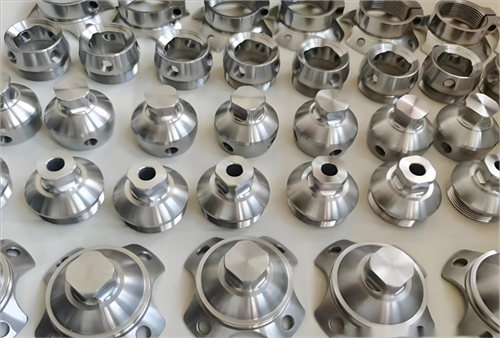
Titanium alloys are widely used in aerospace, medical, marine engineering and other fields due to their excellent strength, corrosion resistance and biocompatibility. However, the forming process of titanium alloys is complex, and the appropriate forming method needs to be selected according to the shape, size and performance requirements of the parts.
This article will introduce in detail the seven major forming processes of titanium alloys, including bending forming, stamping forming, spinning forming, injection molding, hot isostatic pressing, die-less multi-point forming and drawing technology, and analyze their process characteristics and application fields.
1. Bending Forming
Content: Shape control is achieved through the combination of plastic deformation and elastic recovery. The springback amount needs to be compensated (reserve a margin of 2° to 5°). The minimum bending radius is usually three times the pipe diameter for cold bending or twice for hot bending. The hot bending temperature is controlled at 177 to 427℃, and inert gas protection is used to prevent oxidation.
Application fields: Pressure shells of deep-sea detectors, chemical equipment pipelines.
Characteristics: Stress relief annealing is required after cold bending. The springback angle of hot bending can be controlled within 1°, and the thickness of the surface oxide layer is less than 0.1mm.
2. Stamping Forming
Content: It is divided into cold stamping (wall thickness < 2mm) and hot stamping (deformation > 50%). Complex shapes are achieved through temperature control. For hot stamping, the blank is heated to 600 - 800℃ first, and the mold is preheated to 150 - 200℃ to reduce temperature difference stress.
Application fields: Aircraft wing skin panels, chemical equipment heads.
Characteristics: Cold stamping requires final annealing to eliminate stress. High-temperature hot stamping can achieve a single deformation of 60%, with a surface roughness of Ra < 0.8μm.
3. Spinning Forming
Content: By applying pressure to the rotating blank with spinning tools, hollow rotary parts are formed. It is divided into ordinary spinning (constant wall thickness) and power spinning (variable wall thickness), with the feed rate of the spinning wheel and the rotational speed of the mandrel as the core parameters.
Application fields: Bottoms of fuel tanks for aerospace rockets, nozzles of aviation engines.
Characteristics: Material utilization rate exceeds 90%, and the tolerance of thin-walled titanium alloy parts can be controlled within 0.03 to 0.05mm.
4. Injection Molding
Content: After mixing titanium alloy powder with a binder, injection molding is carried out. After debinding and sintering, precise parts are obtained. The particle size distribution of the powder and oxygen content need to be controlled.
Application fields: Dental implants, surgical instruments.
Characteristics: Excellent biocompatibility, suitable for small and complex structural parts, and high dimensional accuracy.
5. Hot Isostatic Pressing
Content: This process involves subjecting titanium alloy powders or billets to full densification under high temperature and pressure, with the pressure reaching over 100 MPa and the temperature ranging from 900 to 1200°C.
Application fields: High-temperature components of aero engines, nuclear power equipment.
Characteristics: Eliminates internal porosity, enhances mechanical properties of materials, and is suitable for components with high reliability requirements.
6. Die-less Multi-point Forming
Content: Local plastic deformation of titanium plates is achieved through multi-point array dies to realize large-scale curved surface forming. The displacement at each point needs to be controlled to coordinate the deformation.
Application fields: Ship pressure-resistant shells, spacecraft outer shells.
Characteristics: No need for traditional dies, suitable for single-piece or small-batch production, and reduces manufacturing costs.
7. Stretch Forming Technology
Content: By applying axial tensile force and lateral pressure to titanium plates, double curvature forming is achieved. The ratio of tensile force to blank holder force needs to be controlled to prevent cracking.
Application fields: Spacecraft skins, automotive body panels.
Characteristics: High forming accuracy, good surface quality, suitable for high-curvature complex-shaped parts.
With the continuous expansion of titanium alloy applications, its forming processes are constantly innovating and developing. In the future, with the continuous emergence of new materials and new processes, titanium alloy forming technologies will become more efficient, precise, and environmentally friendly, providing strong support for the development of high-end manufacturing.