


Knowledge
Key Process Parameter Boundaries for Medium Frequency Furnace Melting of High-Quality Ductile Iron
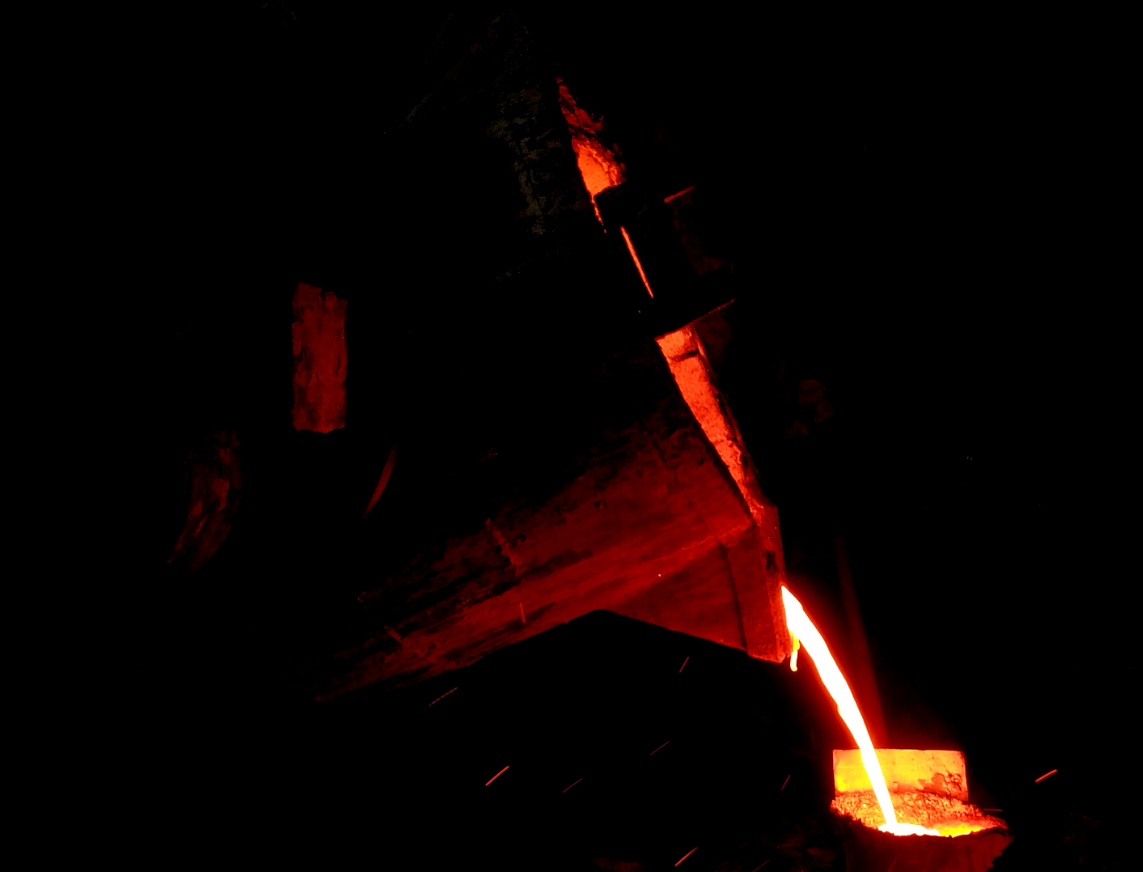
The performance of ductile iron depends on the spheroidization effect of graphite. Medium-frequency furnaces provide the basis of composition and temperature for ductile iron production, but the process has a low tolerance for errors. This article analyzes the three major links of pure smelting, spheroidization treatment, and inoculation process in ductile iron production, clarifying the key parameter boundaries, failure risks, and control strategies of temperature, composition, residual elements, and treatment processes.
I. Core and Parameter Boundaries of Spheroidization Control
Ductile iron production requires precise control of multiple key parameters. Medium-frequency furnaces provide pure and controllable molten iron, but achieving stable spheroidization requires strict control of the boundaries of each process parameter.
II. Purity of Molten Iron: The Foundation of Successful Spheroidization
Spheroidizing elements react strongly with sulfur and oxygen. Impure molten iron will lead to waste of spheroidizing agents and failure of spheroidization.
Sulfur content limits:
Upper limit: < 0.015%, for high-end ductile iron, it should be < 0.010%.
Risks: Sulfur consumes the inoculant, generates sulfide inclusions, leading to spheroidization regression, slag inclusion and porosity.
Boundary between oxygen and interfering elements:
Oxygen: Highly oxidizing molten iron consumes spheroidizing agent, forming oxide inclusions.
Trace elements: The total amount of anti-spheroidizing elements such as Ti, Pb, Bi, Sb, and As should be less than 0.1%, and the lower the better. They damage the roundness of graphite spheres.
III. Temperature Parameter Boundaries: Controlling Reactions and Degradation
Spheroidizing treatment temperature:
Lower limit: 1480℃. If the temperature is too low, the spheroidizing agent will not react fully, the magnesium absorption rate will be low, and the spheroidization will be poor.
Upper limit: 1520℃. If the temperature is too high, the magnesium burn-off will increase, the reaction will be intense, the absorption rate will decrease, and oxidation will be exacerbated.
Optimal range: 1500℃ - 1520℃.
Pouring temperature and time window:
Time boundary: The time from the end of spheroidization treatment to the completion of pouring should be less than 15 minutes to prevent the decline of magnesium content and the deterioration of spheroidization.
Temperature boundary: It is recommended to be between 1350℃ and 1420℃, which is beneficial to reduce shrinkage porosity, slag inclusion and gas holes.
IV. Chemical Composition Boundaries: Creating a Spheroidizing Environment
Carbon equivalent control:
Concept: Use a high carbon equivalent (4.5% - 4.7%) to optimize fluidity and reduce shrinkage.
Risk: In thick and large sections, a high CE is prone to cause floating graphite (flower-like graphite aggregates). The upper limit of CE needs to be controlled based on the section size.
Silicon content control:
Composition: It consists of three parts: silicon in the original molten iron, silicon brought in by the inoculant, and silicon brought in by the spheroidizing agent.
Boundary: The silicon content of the original molten iron needs to leave room for subsequent inoculation. The final silicon content affects the matrix and is usually controlled between 2.2% and 2.8%.
V. Spheroidizing and inoculation treatment: Key process boundaries
Spheroidization process selection:
Blow-in method: Traditional, with poor stability.
Covering method: Improved type, with increased recovery rate.
Wire feeding method: Advanced process, with stable reaction, high and stable magnesium absorption rate, and good controllability.
Residual element control:
Residual magnesium: Lower limit 0.035% (to ensure spheroidization rate), upper limit 0.055% (to prevent slag inclusion and white cast tendency).
Residual rare earth: Usually < 0.03%, excessive amount causes deformation of graphite spheres.
Inoculation treatment boundary:
Function: Prevent carbides, increase the number of spheroidal graphite, and improve the roundness of graphite spheres.
Requirements: Use in-process inoculation, in-mold inoculation and other instantaneous inoculation technologies to counteract rapid decline.
VI. Conclusion: Systematic Parameter Control
High-quality ductile iron production relies on the coordinated control of multiple parameter boundaries:
Purity is the foundation: ultra-low sulfur, oxygen, and interfering elements.
Temperature is the key: precise control of the spheroidization temperature and the pouring time window.
Composition is the framework: high CE design matched with cross-sectional dimensions to prevent graphite floatation.
Process is the core: wire feeding spheroidization and instantaneous inoculation are advanced methods to ensure stable quality.