


Knowledge
Extrusion Mold Heat Treatment Process
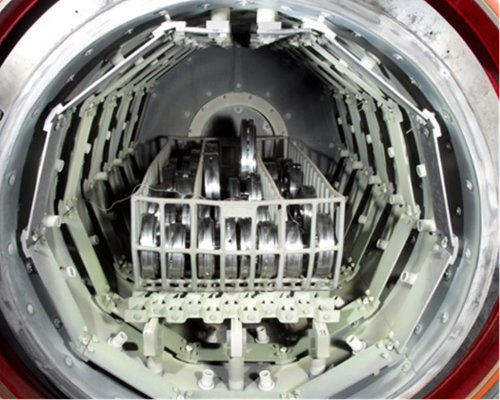
Stress Relief Annealing Treatment
Perform stress relief heat treatment on key processing components (i.e., those prone to deformation or large-sized parts), especially molds. Stress relief is carried out at a temperature of approximately 550°C to 660°C. Usually, it is applied before hardening, with the aim of minimizing tension, but it is also recommended to use it after final mechanical processing. Annealing is typically performed on processed raw material parts to obtain a structure with low hardness, good cold plasticity, and good machining performance for machine tools. Specifically:
l Complete annealing;
l Isothermal annealing;
l Spherical annealing.
Normalizing annealing treatment is a heat treatment process used to enhance the mechanical strength of steel. This method can maintain the uniformity of the workpiece's structure and improve its machinability, preparing it for subsequent processing. Normalizing is carried out at a temperature range of 800°C to 920°C. Then, the components are air-cooled. Generally, compared with the original microstructure of the semi-finished product, due to the influence of structural transformation and air cooling, the grains will be refined, which is much faster than the cooling process experienced by the workpiece after traditional manufacturing processes. This eliminates the typical undesirable needle-like microstructure found in forged or stamped components, or reduces the presence of the band-like structure commonly found in semi-finished products with thermoplastic deformation.
Solution annealing is one of the most popular heat treatments, as it can impose significant requirements on the processed workpieces. Many companies in the oil and gas and automotive industries in central and northern Italy rely on our expertise to achieve the highest precision in processing. Solution annealing, also known as "solution hardening" or "super-hardening", is an excellent treatment for stainless steel. It is particularly recommended for imparting elasticity to stainless steel and duplex steel and maximizing corrosion resistance, making it especially suitable for all deep-drawn objects.
This process is carried out in a vacuum at temperatures ranging from 1000°C to 1100°C, allowing the carbon in the metal matrix to dissolve, and then it is rapidly cooled with nitrogen to avoid the embrittlement phenomenon that occurs when heated between 480°C and 850°C, which could potentially negate all the benefits the material offers at high temperatures.