


Knowledge
Eight Strategies for Titanium Alloy Machining
Difficult/Problem
Titanium alloy, with its unique advantages, occupies an important position in aviation, aerospace, medical and other fields. In the past two years, it has also risen in the 3C consumer electronics field, and is used in the body and structural parts of many hot-selling high-end smartphones.
However, the difficult characteristics of titanium alloy processing have been bothering engineers and technicians. This paper will discuss the difficulties of titanium alloy processing and put forward corresponding countermeasures, in order to provide technical support for the wide application of titanium alloy.
1. Why is titanium alloy difficult to process
01 Temperature Focus
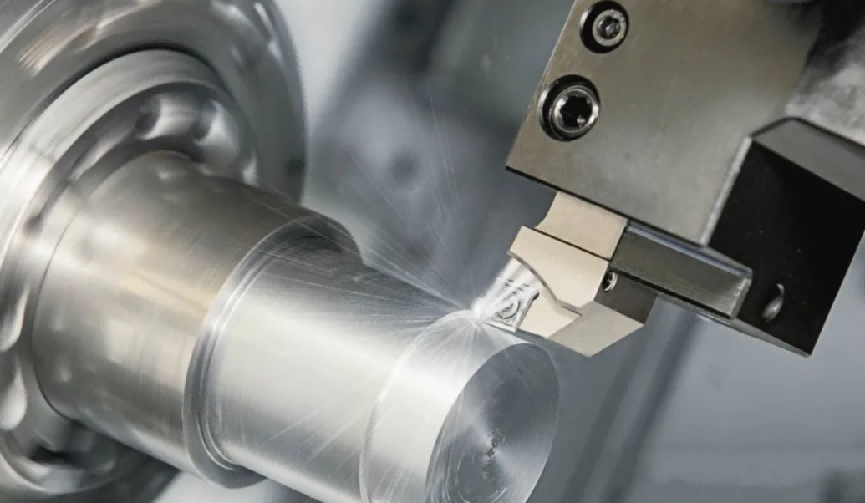
Most titanium alloys have extremely low thermal conductivity, only 1/7 of steel, 1/16 of aluminum, and 1/25 of copper. As a result, heat generated during cutting is difficult to dissipate and concentrates in the cutting area. The tool tip temperature can rise to 1000℃, leading to rapid tool wear, cracking, and chip buildup, which shortens the tool's lifespan.
The cutting high temperature is concentrated at the tip of the tool, which is difficult to dissipate heat and easy to wear. The high temperature also destroys the surface integrity of titanium alloy parts, reduces the geometric accuracy of parts, and causes the phenomenon of machining hardening, which seriously reduces the fatigue strength.
02 Elastic deformation
Titanium alloys exhibit relatively low elastic modulus. For instance, TC4 has an elastic modulus of merely 110 GPa, compared to 210 GPa in 45 steel, while stainless steels like 303,304, and 316 maintain elastic moduli around 200 GPa. During machining, titanium alloys are prone to elastic deformation, particularly when processing thin-walled or annular components. When thin-walled parts undergo localized deformation exceeding their elastic limit, plastic deformation occurs, resulting in a significant increase in both the strength and hardness of the material at the cutting point.
Cutting pressure causes elastic deformation and rebound of the workpiece, increases the friction between the tool and the workpiece, generates additional heat, and aggravates the problem of poor thermal conductivity of titanium alloy.
03. Strong affinity
Titanium alloys have good affinity and are prone to forming long and continuous chips during turning and drilling. These chips will wrap around the tool and hinder its function. When the cutting depth is too large, it is easy to cause sticking, burning or breaking.
Of course, the affinity advantage is valuable in many areas, such as in ion pumps, where titanium is used as a cathode plate. When titanium atoms are sputtered onto the inner wall of the anode tube, they can adsorb gas molecules, creating an ultra-high vacuum environment.
04 Vibration
While the elasticity of titanium alloys may enhance component performance, it paradoxically becomes the primary source of vibration during machining. The vibration generated by titanium alloy processing is ten times greater than that of steel. As cutting heat concentrates in the cutting zone, this results in serrated chips and fluctuating cutting power. 2. Strategies for titanium alloy machining
01 Cool
Use coolant to reduce cutting temperature. Generally, insoluble oil coolant is suitable for low speed heavy cutting, and soluble cutting coolant is suitable for high speed cutting.
In addition, low-temperature cutting methods can be employed, such as using liquid nitrogen (-180°C) or liquid CO2 (-76°C) as cutting fluids. These methods effectively reduce the temperature in the cutting zone, improve surface finish, and extend tool life.
02 Select the appropriate tool
The selection of appropriate cutting tools can significantly enhance machining efficiency. Unlike steel, titanium alloys dissipate heat primarily through the cutting edge and coolant rather than chip evacuation, meaning the cutting edge must endure extreme thermal and mechanical stresses. Maintaining a sharp cutting edge reduces cutting forces.
In addition, the use of polishing groove grinding technology and high positive angle indexable blades also help to reduce cutting pressure.
When necessary, a coated tool can also be used to reduce the stickiness of the alloy and break the long chips. This not only reduces the friction during the chip removal process, but also helps to control the heat generated during the machining process.
03 Select the right cutting fluid: cooling and lubrication
Avoid using water-based cutting fluids. Prefer N32 machine oil with kerosene (3:1 or 3:2 ratio) or sulfur-based cutting oil. For special applications, use electrolyte solutions containing dicapryl sulfonate and triethanolamine, which provide both cooling and lubrication.
04 Constant feed or increase the feed rate
The machining of titanium alloy is easy to harden, that is, the hardness of titanium alloy will increase in the process of cutting, which will accelerate the wear of the tool. Therefore, it is very important to keep the constant feed for the minimum machining hardening.
Of course, if the device performance allows, you can try to increase the feed rate. This will reduce the time the tool stays in the machining area, thereby reducing the chance of heat buildup and machining hardening.
05 Reduce cutting speed
Control the heat release and use one third or less of the steel cutting speed for titanium alloy machining.
06 Match tools to the process
The life of the tools with ceramic, titanium carbide and titanium nitride coating is relatively short. Generally, the tools with cemented carbide are preferred for the large batch of titanium alloy processing, while the tools with high speed cemented carbide are more suitable for the small batch of titanium alloy processing.
At present, ultrasonic machining technology is under development, its purpose is to reduce the contact time between the tool and the workpiece, to extend the service life of the tool.
07 Use high rigidity machine tools
High rigidity is critical for successful machining of titanium alloys. The ideal titanium alloy milling machine must be rigid, with a spindle that can operate at low speeds and high torque to absorb vibration and reduce chatter during cutting.
08 Periodic cleaning
Clean and maintain the equipment and tools regularly to prevent chip accumulation, which may affect processing quality.